
Corporate Law
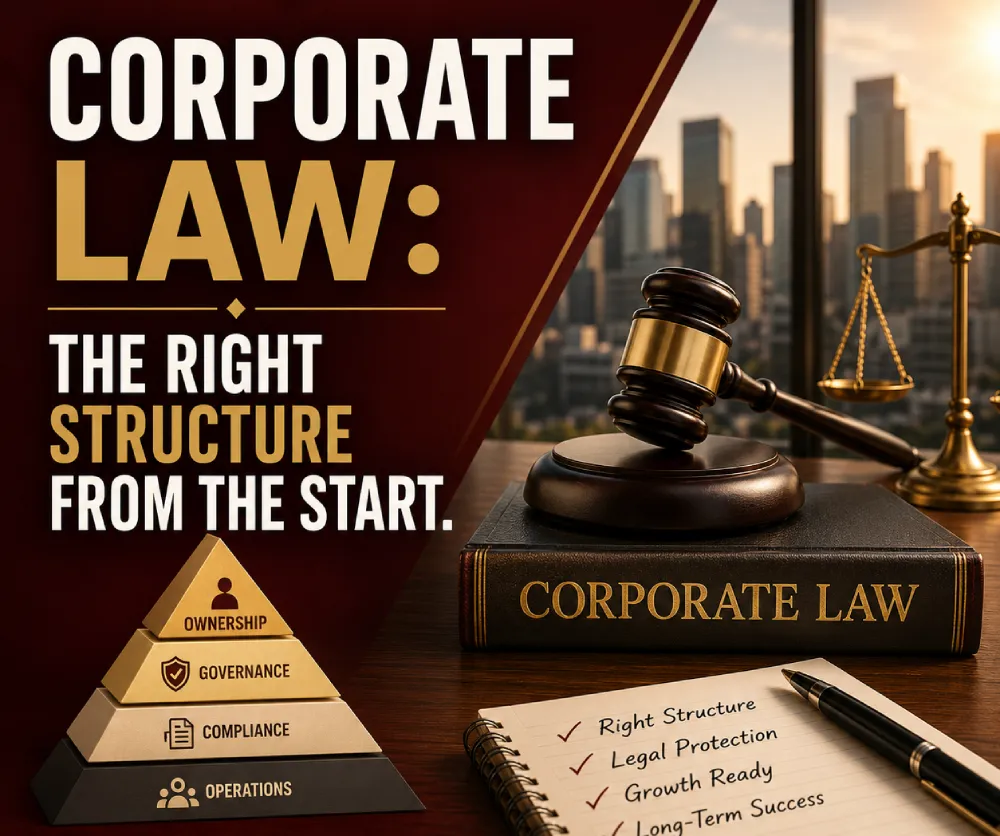
The Right Structure From the Start.
Sound Legal Foundations for Your Business and Investments.
Whether you are setting up a new business, buying into one, or formalising arrangements between co-owners, getting the right legal foundations in place from the outset saves time, money, and disputes later.
Garg Lawyers works with business owners and investors to put the right documents in place
Our Corporate Law Services Include
Company and Trust Structures
Advising on and establishing appropriate business structures, including proprietary limited companies and trusts.
Share Sale and Purchase Agreements
Acting for buyers and sellers in share transactions, including drafting and reviewing share sale agreements, warranties, indemnities, and conditions of completion.
Shareholder Agreements
Documenting the rights and obligations of co-owners clearly, including decision-making processes, profit distribution, and exit arrangements.
Business Sale and Purchase Agreements
Drafting and reviewing agreements for the sale or purchase of a business, including asset schedules, restraint of trade clauses, and handover arrangements.
Service and Supply Agreements
Drafting and reviewing supply and service agreements covering terms, delivery, payments, and business obligations.
Employment and Consultancy Agreements
Preparing employment and contractor agreements covering roles, pay, confidentiality, IP rights, restraints, and termination terms.
Why Choose Garg Lawyers for Corporate Law
- Practical, transactional corporate advice without the big firm overhead
- Clear documentation tailored to your business and co-owners
- Accessible, responsive service from an experienced team
- English, Hindi, and Punjabi spoken

Buying shares, selling a business, or setting up with a partner? Speak to Garg Lawyers before you sign anything.

Company, Trust or Sole Trader: Which Structure Is Right for Your Business?
One of the first decisions every new business owner faces is how to structure their business. It is also one of the most consequential. Your structure affects your personal liability, your tax position, how you bring in investors or co-owners, and how easy it is to sell or exit the business later.
There is no single right answer. Here is a practical overview of the main options for Queensland small businesses.
Sole Trader
Simple and inexpensive to set up. You operate in your own name, report income in your personal tax return, and keep full control. The significant drawback is that there is no separation between you and the business, your personal assets are exposed if the business incurs debts or faces a claim. Suitable for low-risk, early-stage work but generally not the right long-term structure once the business has real value.
Partnership
Two or more people carry on business together and share profits and losses. Like a sole trader, there is no liability protection, each partner is personally liable for the debts of the partnership, including debts incurred by the other partners in the course of the business. A written partnership agreement is essential. Without one, the default provisions of the Partnership Act 1891 (Qld) apply, which may not reflect what you actually agreed.
Proprietary Limited Company
A company is a separate legal entity from its shareholders. In most circumstances, shareholders are not personally liable for the debts of the company, their exposure is generally limited to what they have invested. A company structure also makes it easier to bring in investors, transfer ownership, and operate at scale.
The trade-off is compliance. A company must be registered with ASIC, keep proper records, and lodge annual returns. If there are multiple shareholders, a shareholder agreement is strongly recommended to govern decision-making and handle situations where co-owners disagree.
Trust
A trust is not a separate legal entity; a trustee holds assets and carries on the business on behalf of the beneficiaries. Discretionary (family) trusts offer significant flexibility in how income is distributed, which can be tax-effective for families. Unit trusts allocate fixed proportional interests to each unitholder, similar to shares in a company.
Trusts are popular with small and family businesses but add legal and administrative complexity. A corporate trustee, a company acting as trustee, can combine the asset protection of a company with the flexibility of a trust.
Which One Is Right for You?
The right structure depends on your specific circumstances: your risk profile, whether you have co-owners, your tax position, and your plans for growth and exit. Getting it wrong at the start is significantly more expensive to fix later than getting it right upfront.
Your business structure is a legal and tax decision that should be made with the right advice before you start trading, not after.
Garg Lawyers advises business owners on structure, governance, and corporate documentation. Call 0431 822 406 or email info@garglawyers.com.au
This article is general information only and does not constitute legal advice. For advice specific to your circumstances, please contact Garg Lawyers.
Going Into Business With Someone? Get a Shareholder Agreement
Starting a business with a partner or co-investor can be one of the best decisions you ever make. It can also become one of the most costly if the relationship breaks down and there is nothing in writing setting out what happens next.
A shareholder agreement is a private contract between the co-owners of a company. It sits alongside the company’s constitution and fills in the gaps the Corporations Act 2001 (Cth) does not address. It is one of the most important documents a business with multiple owners can have, and one of the most commonly skipped.
What Should a Shareholder Agreement Cover?
- Decision-making — which decisions require unanimous agreement versus a simple majority. Without this, a majority shareholder can make decisions the minority has no power to prevent.
- Dividends — when and how profits are distributed. Co-owners frequently have very different expectations about this.
- Share transfers — whether a shareholder can sell to an outsider or whether the others have the right to buy those shares first. Without this provision, you could find yourself in business with someone you never agreed to.
- Exit events — what happens if a shareholder wants to leave, loses capacity, or passes away. A buy-sell mechanism protects the business and the remaining owners.
- Dispute resolution — an agreed process for resolving disagreements before they become expensive.
What Happens Without One?
Buying Shares in an Existing Company
A shareholder agreement is not a sign of distrust, it is a sign of good business sense. The time to agree on the rules is before there is a dispute, not during one.
Garg Lawyers drafts and reviews shareholder agreements and share sale documents for small businesses across Queensland. Call 0431 822 406 or email info@garglawyers.com.au
This article is general information only and does not constitute legal advice. For advice specific to your circumstances, please contact Garg Lawyers.